





In This Article
- Who really benefits from our everyday choices?
- Why getting what we want isn't always good for us.
- How small adjustments can create win-win solutions in relationships.
- What asking Who Benefits? reveals about political and social decisions.
- Why doing no harm is essential to creating a better world.
- How changing the rules of the Game of Life can benefit everyone.
When we are confused about a situation or a choice, I think a good question to ask to gain clarity is: Who benefits? And, of course, in a win-win world, the answer to that question would be everyone.
But, of course, in the world we live in currently, which is largely based on competition and greed and other such energies, oftentimes there is only one winner and a multitude of people who do not benefit from the situation or solution proposed.
And this applies to world situations, personal relationships, our own body, and all the choices we make. Who benefits, I'm realizing, is a very valid question to have in our toolbox.
But perhaps there's another question we need to add to that toolbox: Who is harmed? Because sometimes what looks like a benefit at first glance may turn out to be something quite different when we look at the bigger picture.
And maybe that's part of the challenge. We've become so accustomed to looking at what we want, or what we think we'll gain, that we don't always stop to consider the consequences of our choices, either for ourselves or for others.
Who Benefits from Our Personal Choices?
So let's start on a very personal level. Let's say you're craving something loaded with sugar. Who benefits if you eat that?
Well, to start further away from you, obviously the manufacturer, the store that sells it, and the people who get paid by those two entities benefit.

Then, if you take it closer to home, maybe the people around you benefit because you won't be as moody once you've had your sugar fix. And, in the same way, you win temporarily because you will have temporarily satisfied whatever led to that craving or whatever emotion sits underneath it.
But in the long run, do you really benefit? Eating too much sugar on a regular basis can have negative effects on our health. And while that sweet treat may give us a moment of pleasure, it doesn't necessarily give our body or our emotions what they need.
So the answer to the question Who benefits? about eating your sugar treat may be, in the short term, you do. But in the long run, perhaps not so much. And that brings us to another important distinction. Just because something gives us what we want in the moment doesn't necessarily mean it benefits us.
Sometimes we confuse satisfying a desire with doing something good for ourselves. And those two things are not always the same. Something that feels wonderful for five minutes may not be so wonderful five hours later, or five years later.
So perhaps the question becomes not only Who benefits? but also For how long? Are we looking at immediate gratification or at something that will contribute to our well-being in the long run?
Finding the Win-Win in Relationships
Okay, so then let's look at relationships. Let's say your partner wants you to do something, like watch a particular movie, and you don't.
Now you can look at both scenarios, whether you agree or whether you don't. Who benefits? Or perhaps more importantly, what are the benefits for both people involved?
Once you see clearly what the benefits are for everyone involved, then you are in a better position to get in touch with what feels like a win-win solution.
It's not always a straight yes-or-no answer. Sometimes it's a variation on the suggested task or project or outing. Maybe the win-win is, yes, I'll do this, but in an hour, or tomorrow, or whenever the answer provides a win-win rather than a win-lose, or what feels like a win-lose.
Because sometimes the problem isn't really what we're being asked to do. It's about the "when" it would take place, or how, or perhaps who else is going to be involved. And sometimes just looking at the bigger picture, and looking for the win-win can help us realize that, with just a gentle tweak, the situation can become a win-win.
The interesting thing is that neither person may necessarily get exactly what they originally wanted. Yet both people can end up benefiting. And isn't that really what we're looking for?
Because, in a sense, every experience we have, even if it feels like a loss, is an opportunity to learn something about ourselves and about the process of life. And any situation that brings up resentment or anger is definitely worth looking at more closely to see how it could become, instead, a win-win situation.
And perhaps there's another benefit that we don't always recognize. When we take the time to look for a solution that respects everyone involved, we're also nurturing the relationship itself. We're saying, in effect, that your needs matter and so do mine. We don't have to compete to see whose needs are more important.
So, as with most things in life, the key to finding the balance or the Sweet Spot is awareness. Awareness both of our own self as well as awareness of the people in the world around us.
Looking at the Bigger Picture
And, of course, what applies in our personal lives also applies to the world around us. After all, governments, businesses, and institutions are made up of people making choices. And those choices, just like our personal choices, have consequences.
Now, on the world stage, or what we may classify as political events or shenanigans, the question Who benefits? can be a very enlightening one.
With projects, changes, budget cuts, and whatever else is proposed, the question Who benefits? can help bring clarity to situations that are often muddied with propaganda, gaslighting, pretension, and outright lies or truth stretching.
Sometimes it can be difficult to understand what's really going on. We're told that a certain policy will help the economy, that a particular change will make things better, or that some sacrifice is necessary for the greater good.
But better for whom? And who is being asked to make the sacrifice? This is where asking Who benefits? can give us a a more complete view and understanding.
When we're standing in the middle of a situation, surrounded by all the noise, the arguments, the promises, and the emotional reactions, it can be difficult to see clearly. It's a bit like being lost in a forest. All we can see are the trees immediately around us.
But when we rise above the situation, even just mentally, we can begin to see the larger picture. We can see where the paths lead, who is being helped, who is being left behind, and perhaps who is benefiting from keeping everyone else confused.
Instead of just accepting what we're being told, we can look deeper and discover the actual consequences. Not simply what is being promised, but what is likely to happen. Not simply who is supposed to benefit, but who actually does.
And perhaps most importantly, are there people who will be harmed by what is being proposed? Because a proposal can benefit some people and still cause serious harm to others. And just because something is presented as being good for everyone doesn't necessarily make it so.
Do No Harm
But maybe it's not simply a matter of looking at who benefits. We also need to ask who does not benefit. Who gets hurt or harmed by this situation that's being proposed?
Because, obviously, if someone is being harmed, they are not winning. They may be being used, taken advantage of, stolen from, or neglected. And any of those situations can be interpreted as doing harm rather than creating a win-win situation.
It is interesting that both the medical tradition associated with Hippocrates as well as Buddhist teachings place importance on avoiding harm.
In medicine, the familiar principle of doing no harm reminds us that even an action intended to help can have harmful consequences. And in Buddhism, the intention to avoid harming living beings is an important part of ethical living. And that's what asking Who benefits? can help us understand.
Of course, sometimes in life we have to make difficult choices, and not everyone will be happy with the outcome. But there's a difference between not getting what we want and actually being harmed.
A child who doesn't get another piece of candy may be unhappy, but that doesn't mean the child has been harmed. And an adult who doesn't get everything they want in a relationship or a business arrangement isn't necessarily being harmed either. In the long run, it may come to light that the new arrangement or decision was actually a benefit.
So perhaps seeking a win-win situation is not about making sure everyone gets what they want. It's about looking for a solution that respects everyone involved, reduces harm, and creates the greatest lasting benefit possible.
And that requires us to look beyond our immediate wants and desires. It requires awareness, and perhaps a willingness to question some of the things we've always taken for granted.
Looking Beyond Promises to Consequences
One of the things I'm realizing is that it's very easy to get caught up in what we're being promised.
Whether it's an advertisement promising happiness if we buy a certain product, a politician promising prosperity if we support a certain policy, or even our own mind promising that we'll feel better if we indulge a particular craving, the promise can be very appealing.
But what happens after the promise has been fulfilled, or perhaps not fulfilled? That's where the question Who benefits? becomes especially useful. Because it encourages us to look beyond the immediate attraction and consider what happens next.
Does this choice create something positive that lasts? Does it contribute to our health, our relationships, our community, or the world we live in? Or does it provide a temporary benefit while creating problems that someone else, or perhaps our future self, will have to deal with?
And sometimes the people making the promises may benefit whether or not the promises are fulfilled. So perhaps another question we can ask is: Who bears the consequences?
Because when the people who receive the benefits are not the same people who bear the costs, we may want to take a much closer look at what is being proposed. And this applies just as much to our personal choices as it does to the decisions made by those in positions of power.
Changing the Rules of the Game
So I encourage you this week to start looking at the choices in your life, or the choices that you see around you in the world of community or politics, and ask: Who benefits? Is this a win-win situation? Is someone being harmed?
And perhaps also ask: Is the benefit temporary or lasting? And is there another choice that could benefit everyone involved?
I think those questions will shed light on situations that may have been murky or confusing. Because in order to make a decision that is based on higher principles, we first have to have a clear vision and understanding of what has taken place, what is taking place, and what is being proposed.
And perhaps because we have grown up in such a competitive world, we have come to believe that there's always a winner and a loser. That if someone else wins, somehow that means there's less for us. Or that for us to succeed, someone else has to fail. But that doesn't have to be our reality.
Perhaps we've simply been playing by rules that don't serve us very well. Rules that encourage competition rather than cooperation, greed rather than generosity, and winning rather than finding solutions that benefit everyone.
And if those are the rules we've been playing by, maybe it's time to change them.
When we live by the principle of Do no harm and also by the win-win guideline, we create a very different world. Not necessarily a world where everyone always agrees, or where everything works out exactly as we would like, but a world where we take the well-being of others into consideration along with our own. And that, to me, is a world worth striving for.
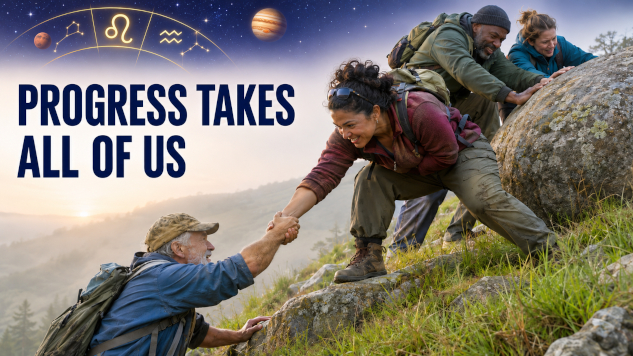
The goal of the Game of Life should not be to win or to take advantage of someone else or to benefit from someone else's distress. Perhaps the real goal is to learn how to play together, how to recognize that we're all part of the same team, and that what happens to one of us ultimately affects the rest of us.
It's time to change the rules of the game. It's time to get back to the principle of doing no harm, and to recognize that our own well-being and the well-being of others are not separate things.
And perhaps the next time we're faced with a confusing situation or a difficult choice, we can start with that one simple question: Who benefits?
And then take it one step further. Who might be harmed, and what could we do differently so that everyone has a chance to benefit?
Because that's how we create a win-win world.
About The Author
 Marie T. Russell is the founder of InnerSelf Magazine (founded 1985). She also produced and hosted a weekly South Florida radio broadcast, Inner Power, from 1992-1995 which focused on themes such as self-esteem, personal empowerment, and well-being. Her articles focus on transformation and reconnecting with our own inner source of joy and creativity.
Creative Commons 3.0: This article is licensed under a Creative Commons Attribution-Share Alike 4.0 License. Attribute the author: Marie T. Russell, InnerSelf.com. Link back to the article: This article originally appeared on InnerSelf.com
Related Books:
* The Art of Happiness: A Handbook for Living
by the Dalai Lama and Howard C. Cutler
Through conversations about everyday life, relationships, and personal challenges, the Dalai Lama shares how compassion and a change in perspective can lead to greater happiness. The book encourages us to look beyond immediate desires and recognize how our choices affect both ourselves and others.
Amazon: https://amazon.com/exec/obidos/ASIN/1573227544/innerselfcom
* Nonviolent Communication: A Language of Life: Life-Changing Tools for Healthy Relationships
by Marshall B. Rosenberg
Marshall Rosenberg presents a compassionate approach to communication that helps us recognize the needs and feelings behind disagreements. By listening without judgment and expressing ourselves honestly, we can move beyond competition and resentment toward solutions that respect everyone involved. His practical techniques encourage greater understanding and cooperation in everyday relationships.
Amazon: \https://amazon.com/exec/obidos/ASIN/189200528X/innerselfcom
* The 7 Habits of Highly Effective People: 30th Anniversary Edition
by Stephen R. Covey
Stephen Covey introduces the principle of thinking win-win as an alternative to the belief that one person's success must come at another's expense. He explains how cooperation, personal responsibility, and mutual respect can create lasting benefits in our relationships and communities. His approach encourages us to make decisions based on enduring principles rather than short-term rewards.
Amazon: \https://amazon.com/exec/obidos/ASIN/1982137274/innerselfcom
Article Recap:
Asking Who Benefits? helps us look beyond immediate desires, persuasive promises, and familiar assumptions to understand the real consequences of our choices. Whether we're making personal decisions, resolving relationship disagreements, or evaluating political proposals, the goal is to recognize both benefits and potential harm. By practicing awareness, considering long-term consequences, and seeking win-win solutions, we can make choices that respect ourselves and others. Changing the Game of Life begins when we stop seeing every situation as a competition and start looking for ways everyone can benefit.
#WhoBenefits #WinWinSolutions #ConsciousChoices
#DoNoHarm #PersonalGrowth #SelfAwareness
#LivingInHarmony #MindfulLiving #InnerSelf #innerselfcom