In This Article
- The historical echoes of the 1970s oil crisis1>
- The illusion of permanent cheap energy1>
- Geopolitical instability and supply chains1>
- The hidden costs of the green transition1>
- Preparing for a new economic reality1>
Watch the dollars climb while you fill the tank. You still have to get to work tomorrow, whatever the pump charges. Remember the gas lines of the 1970s? After all the talk about new technology and abundant oil, you might have expected that worry to be behind us. Yet here we are, wondering how much the next fill-up will take out of the grocery money.
The brochures left out a few things. Fuel still has to reach the people who need it, at a price they can afford. When that gets harder or more expensive, we pay for it every time we drive. I think there is more going on here than a price jump that will disappear next week. We may have to reconsider how much fuel we use and what we are willing to pay for it.
Remember the Seventies?
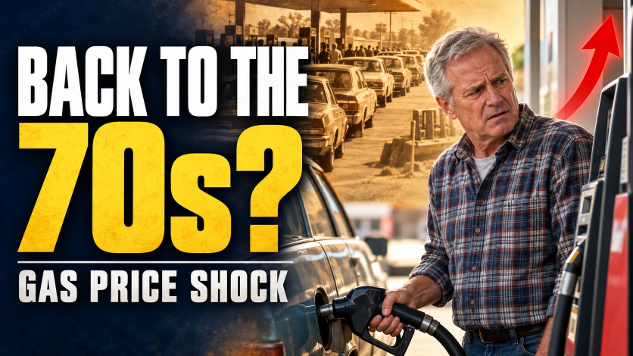
Oil supplies tightened in the 1970s, and prices shot up. Families paid more for basic goods while economic growth slowed. We called it stagflation, which gave people a name for their troubles without doing much to pay the bills. Cheap energy had become something we counted on. When it stopped being cheap, we discovered how many of our expenses depended on it.
A truck driver still had deliveries to make. Families still had to get to work. A small business could hardly close until fuel became affordable again. The people buying it had little choice about paying the higher price.
That dependence is what makes the comparison troubling today. We still rely on supplies from a few important regions. When fuel is affordable, it is easy to put that concern aside. But a low price at the pump does not tell us how well we would manage if those supplies were interrupted.
The Mirage of Endless Abundance
For the last few decades, we lived in a golden age of easy energy. The expansion of hydraulic fracturing and the discovery of massive oil fields led to a period of unprecedented production. This allowed us to ignore the fundamental problem of resource scarcity. We treated the earth like an ATM that would always provide exactly what we needed, exactly when we wanted it.
This gave us a sense of false security. We built a lifestyle of convenience that assumed the cost of moving things across continents would remain low forever. Now, the math is changing. The easiest resources have been extracted, and the harder ones require more energy and more risk to get out of the ground. We are moving from a period of easy wins to a period of complex challenges. The question we must ask is who decided that we could just ignore the physical limits of our resources for thirty years while the bill was being pushed to the next generation.
Geopolitical Friction and the Cost of Security
The world is not a peaceful place, and the geographic reality of our energy sources often puts us at the mercy of whoever controls the flow. We have seen how conflicts in the Middle East and Eastern Europe can turn a local dispute into a global supply shock. When a pipeline is threatened or a shipping lane is blocked, the result is immediate and painful for the consumer. It is the ultimate irony of the global trade system. We want the benefits of a globalized world but we are often unwilling to pay the premium that comes with securing those supply lines.

We want cheap fuel, and we want it delivered without interruption. Trouble along a shipping route can make both wishes harder to grant. Traders do not have to wait for a tanker to stop before reacting to the possibility that it might. There may be plenty of oil available, but it still has to get here. You cannot fill the tank with oil stranded somewhere else.
Paying for the Changeover
I support moving toward cleaner energy. But somebody has to build the electrical lines and equipment, and somebody has to pay for them. Meanwhile, we still need fuel deliveries and the infrastructure that handles them. We cannot shut the old system down simply because we have started building its replacement.
For a time, we have expenses from both. The old equipment needs maintenance while money goes into the new equipment. That makes the changeover costly, though it does not, by itself, explain a particular increase in gasoline prices.
The irony is that while we want to move away from fossil fuels as quickly as possible, the transition itself creates a temporary spike in the cost of the current infrastructure. We are paying for the future while trying to sustain the present. It is a heavy burden to carry, and it is one that falls most heavily on the people who cannot afford to buy their own private solutions.
The Fragility of the Just in Time Model
Our entire economy is built on a just in time model. We want our goods to appear on shelves the moment we want to buy them. This requires a massive, perfectly timed logistics chain that relies on cheap, reliable fuel. When the cost of fuel becomes volatile, the entire chain begins to buckle. We are seeing this in the rising costs of groceries and household goods. If it costs more to move a head of lettuce from a farm to a city, that cost is passed on to the person at the checkout. We chose a system of convenience over a system of resilience.
Cheap delivery helped us stop thinking about how far our purchases traveled. But the miles were always there. When it costs more to bring something to the store, that expense has to go somewhere. Some of it may turn up on your receipt. The distance from the factory or farm to your shopping cart suddenly deserves a little attention.
What Do We Do Now?
I would rather plan for higher fuel costs and be pleasantly surprised than count on cheap gas and find the money missing from the household budget. How much driving can we cut? Which purchases depend on hauling something halfway around the world? Some expenses we can change. Getting to work may be another matter.
When a politician promises cheaper gas, I want to hear how. What will they do if supplies are interrupted again? I also want to know what their plan offers someone driving an old car to work. Telling that person to buy a new vehicle or move closer to the job does little good if they cannot afford either.
And follow the money. Who gets paid more when fuel becomes expensive? Who has to absorb the increase? A worker who still needs to drive to the same job has little room to bargain.
We have spent years arranging our lives around fuel we could afford. Changing those arrangements takes time and money of its own. I would like to see that work underway while we still have some choice about how to do it.
About the Author
 Robert Jennings is the co-publisher of InnerSelf.com, a platform dedicated to empowering individuals and fostering a more connected, equitable world. A veteran of the U.S. Marine Corps and the U.S. Army, Robert draws on diverse life experience, from real estate and construction to building InnerSelf.com with his wife, Marie T. Russell, bringing a practical, grounded perspective to life's challenges. InnerSelf grew from InnerSelf Magazine, founded by Marie T. Russell in 1985, which became InnerSelf.com in 1996. Decades later, InnerSelf continues to inspire clarity and empowerment.
This article is licensed under a Creative Commons Attribution-NonCommercial-NoDerivatives 4.0 License. You may share it with attribution to Robert Jennings, InnerSelf.com, and a link back to the original article at InnerSelf.com. Commercial use and derivative works are not permitted without permission.
Further Reading
-
The Prize: The Epic Quest for Oil, Money & Power
Daniel Yergin traces how oil became central to industry, warfare, and international politics. His account of the 1970s oil crises explains how interrupted supplies shook economies and left households paying for decisions made far from their local gas stations.
Amazon: https://www.amazon.com/exec/obidos/ASIN/1439110123/innerselfcom
-
The New Map: Energy, Climate, and the Clash of Nations
Daniel Yergin examines how shale production, international rivalries, and the search for cleaner energy have changed the energy business. He follows the competing interests behind supply decisions and the difficulties of replacing infrastructure that countries still depend on.
Amazon: https://www.amazon.com/exec/obidos/ASIN/0143111159/innerselfcom
-
How the World Really Works: The Science Behind How We Got Here and Where We're Going
Vaclav Smil explains the energy and materials needed to produce food, manufacture goods, and move them around the world. He examines why reducing dependence on fossil fuels takes more than replacing one technology, giving readers a practical understanding of the work involved in changing these systems.
Amazon: https://www.amazon.com/exec/obidos/ASIN/0593297067/innerselfcom
#energycrisis #oilprices #gasprices #geopolitics #economictrends #historyrepeats #futureofenergy #supplychain #inflation #resilience