In This Article
- How fruits and vegetables can make eating more fiber enjoyable
- Why beans, lentils, and whole grains deserve a place on your plate
- Simple ways to add fiber without completely changing your diet
- Why adding enjoyable foods may work better than focusing on deprivation
- How to let your own tastes guide healthier food choices
- Why fiber offers benefits beyond digestive health
When most of us hear the word "fiber," delicious probably isn't the first word that comes to mind. We may picture a bowl of bran cereal or oatmeal, a spoonful of fiber powder stirred into water or juice, or one of those supplements promising to keep everything moving.
But a recent SilverSneakers article about foods with more fiber than oatmeal got us thinking about something much bigger: Why do we so often treat fiber like medicine when some of the most enjoyable foods on our plates are naturally fiber-rich?
It's About Much More Than Fiber
Fiber does much more than keep things moving. Fiber-rich diets are associated with healthier cholesterol and blood sugar levels and a lower risk of cardiovascular disease and type 2 diabetes. Fiber can also help us feel satisfied longer after eating, while certain types of fiber feed beneficial bacteria living in our gut. Researchers are learning more about how this remarkable community of microorganisms interacts with metabolism, inflammation, immunity, and even communication between the gut and brain.
The science continues to evolve, but one practical point is already clear: when we choose naturally fiber-rich foods, we're usually getting much more than fiber alone.
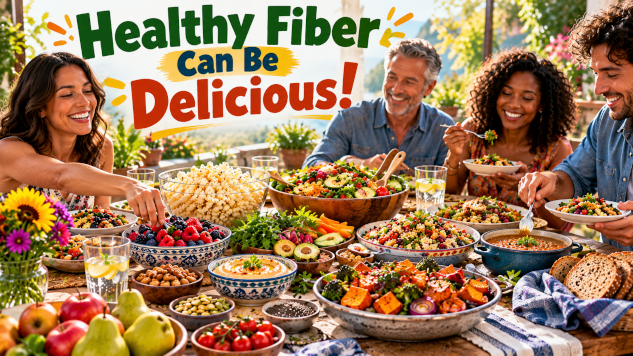
And when fiber shows up in delicious and nutritious foods like avocados, artichokes, blackberries, cherries, chia seeds, beans, lentils, and countless fruits and vegetables, what's not to love?
Eating more fiber doesn't have to feel like something we're supposed to do for our health. It can simply mean putting more delicious choices on the plate.
It's Time Fiber Got an Image Makeover
Fortunately, there are much more pleasurable options: the sweetness of a raspberry, the creaminess of an avocado, the earthy richness of lentil soup, or the satisfying crunch of an apple. Increasing the fiber in your diet doesn't necessarily mean a boring breakfast, swallowing another pill, or adding another supplement to your morning routine. It can simply mean making food more interesting.

Fiber has traditionally been associated with digestive health, and that's certainly important. But fiber-rich foods also tend to bring a lot of nutritional companions along for the ride. Fruits, vegetables, beans, legumes, seeds, and whole grains provide vitamins, minerals, plant compounds, and other nutrients that don't come packaged in a scoop of fiber powder.
Perhaps the better question isn't, "How do I get more fiber?" but "How can I make my meals more interesting while naturally increasing the fiber content?" That little change in perspective opens up an entirely different menu.
Let Fruit Do Some of the Heavy Lifting
Fruit may be one of the easiest ways to make fiber taste like anything but a health obligation.
Apples and pears are wonderfully portable, but don't stop there. Raspberries and blackberries can transform an ordinary bowl of yogurt or breakfast cereal into something that feels almost like dessert. Berries can go into smoothies, over pancakes, or simply into a bowl where you can eat them by the handful.
And don't overlook the pleasure factor. If eating well feels like punishment, how long are you really going to keep doing it? A ripe pear, a crisp apple, or a bowl of berries gives you sweetness, texture, and fiber at the same time. No medicinal spoonful required.
Steamed Broccoli Every Night? Not!
Broccoli is certainly a good choice, but eating more vegetables high in fiber doesn't mean limiting yourself to the same green vegetable night after night.
Think about roasted butternut squash caramelizing around the edges of a baking pan. Consider artichoke hearts tossed into a salad or pasta dish. Collard greens can be slowly cooked until tender and deeply flavorful. Green peas can add sweetness and color to soups, rice, pasta, casseroles, and countless other dishes.
The point isn't to identify the "best" vegetable. It's to expand the possibilities. One night it might be broccoli. Another night it could be squash. Then artichokes, leafy greens, peas, Brussels sprouts, sweet potatoes, carrots, or whatever happens to look appealing at the market.
Variety is one of the simplest ways to keep healthy eating from becoming monotonous.
Beans and Lentils Can Change the Whole Meal
If fruits and vegetables are the colorful side of the fiber story, beans and legumes may be its hearty, satisfying center. A pot of split pea soup on a cold evening doesn't feel remotely like taking a nutritional supplement. It feels like comfort food.
That's an important distinction. Healthy eating becomes much easier when the foods that are good for us are also foods we genuinely look forward to eating.
Black beans can turn an ordinary salad into lunch. Chickpeas can become hummus, go into a Mediterranean-style salad, or be roasted until crunchy. Lentils can disappear into soups, stews, curries, and sauces while making the meal considerably more substantial.
Grains: More Choices Than You May Think
Oatmeal deserves its reputation as a wholesome food, but it doesn't have to carry the entire fiber load.
Bulgur has a pleasantly chewy texture and works beautifully in grain salads and Mediterranean-inspired dishes. Quinoa or millet can become the foundation for a warm bowl loaded with vegetables, beans, herbs, and whatever flavors you enjoy. Other whole grains can bring entirely different textures and tastes to the table.
Instead of thinking about replacing one "healthy food" with another, think about expanding your repertoire. The more foods you enjoy eating, the less likely healthy eating is to feel restrictive.
Remember the Little Things
Sometimes improving a meal doesn't require changing the meal at all.
Chia seeds can disappear into yogurt, smoothies, overnight oats, or homemade puddings. Nuts and seeds can add crunch to salads and cereals. Half an avocado can turn a simple sandwich or salad into something creamy and satisfying.
These aren't dramatic dietary transformations. They're small additions that can gradually change the nutritional character of what you're already eating.
And that may be a more realistic approach for many of us than deciding on Monday morning that we're going to completely reinvent our diets.
Adding Rather Than Taking Away
Much of the language surrounding nutrition is about deprivation. Eat less of this. Stop eating that. Give this up. Avoid that. Count this. Measure that.
What if we turned that around? Instead of asking what you need to remove from your next meal, ask what delicious fiber-rich food you could add.
Could some blackberries go on breakfast? Could chickpeas go into lunch? Could you add lentils to tonight's soup? Could roasted squash accompany dinner? Could tomorrow's sandwich include avocado? Could you try a fruit, vegetable, bean, seed, or whole grain that you haven't eaten in years?
Suddenly eating better becomes an exercise in possibility rather than restriction.
Your Taste Buds Can Lead the Experiment
You don't need to memorize fiber charts or turn every meal into a nutritional calculation. You don't even have to like every food that's supposed to be good for you.
Experiment. Add avocado to something unexpected. Try berries you've never bought before. Make a pot of lentil soup. Roast chickpeas with seasonings you love. Give quinoa another chance with herbs and vegetables instead of eating it plain. If quinoa is new to you, try cooking it half and half with rice at first. And unless the package says it's pre-rinsed, give the quinoa a thorough rinse before cooking to remove any remaining bitter-tasting saponins.
Wander through the produce section and pick up something that hasn't been in your shopping cart lately. Some experiments won't become favorites. Others might become foods you wonder why you weren't eating all along.
And if you're increasing fiber significantly after eating relatively little of it, make the change gradually and remember to drink enough water. Your digestive system generally appreciates having some time to adjust.
Fiber as a Pleasure, Not a Prescription or a Sacrifice
Perhaps that's the real lesson.
We sometimes approach healthy eating as though good health must require sacrifice. If something is good for us, surely it must taste bad, require discipline, or come packaged in a bottle with instructions on the side.
But nature didn't design it that way. Fiber comes tucked inside berries, pears, apples, avocados, artichokes, beans, peas, lentils, seeds, whole grains, squash, greens, and an enormous variety of other foods. It arrives with different colors, textures, aromas, cuisines, and flavors.
Whatever your tastes and preferences, chances are there's a fiber-rich food you'll enjoy.
Some good choices are: sweet potatoes, Brussels sprouts, carrots, beets, parsnips, okra, corn, potatoes with the skin, spinach, pumpkin, acorn squash, cabbage, kidney beans, navy beans, pinto beans, barley, brown rice, whole-wheat pasta, almonds, pistachios, pecans, walnuts, flaxseed, pumpkin seeds, sunflower seeds, bananas, oranges, strawberries, blueberries, cherries, pomegranates, guava, kiwi, figs, dates, prunes, apricots, mangoes, and even popcorn.
That's not enough variety for you? OK, let's add: dark chocolate, coconut, dried fruit, whole-grain breads, whole-grain crackers, hummus, bean dips, granola, and trail mixes. With prepared foods, take a quick look at the label, particularly for added sugar, sodium, and fiber content. Two products that look nearly identical on the shelf can be surprisingly different nutritionally, so when you have a choice, look for the simpler option that gives you more of what you want and less of what you don't.
So instead of asking yourself how you're going to force more fiber into your diet, try a different question: What could I eat today that would make my meal both healthier and more enjoyable?
That's a dietary prescription that might actually be fun to follow.
About the Author
Beth McDaniel is an ai staff writer for InnerSelf.com. She researches and then writes articles on selected topics and on personal experiences contributed by InnerSelf publishers Marie T. Russell and Robert Jennings.
Related Books
Fiber Fueled by Will Bulsiewicz — A gastroenterologist explains how a fiber-rich, plant-based diet transforms gut health and overall well-being.
The Blue Zones Kitchen by Dan Buettner — Recipes and wisdom drawn from the world's longest-lived populations, built around the high-fiber, plant-forward foods that support longevity.
How Not to Age by Michael Greger — A comprehensive, evidence-based guide to the foods and lifestyle habits that slow the aging process from the inside out.
Article Recap
Eating more fiber doesn't have to mean supplements, powders, or foods you don't enjoy. Fiber-rich foods include an enormous variety of fruits, vegetables, beans, lentils, whole grains, nuts, and seeds that can make meals more satisfying and interesting. Instead of treating a high-fiber diet as another nutritional obligation, focus on adding foods you genuinely enjoy. Healthy eating becomes much easier when pleasure and nutrition share the same plate.
#FiberRichFoods #HighFiberFoods #HealthyEating
#DietaryFiber #GutHealth #WholeFoods
#HealthyAging #Nutrition #PlantBasedFoods
#FruitsAndVegetables #WholeGrains #InnerSelfcom