In This Article
- How to build a practical family food reserve by starting with a 72 hour emergency supply
- Why a working pantry should include both ready to eat food and longer lasting staples
- How to rotate older items first so your reserve stays useful instead of becoming waste
- What to consider for water, allergies, infant needs, pets, and power outage safety
- How a modest pantry reserve can ease rising food prices and temporary money stress
Open the cupboard and work out what you could eat tonight if you could not get to the store. Then try tomorrow. Breakfast counts too. You may have plenty of food on the shelves and still find yourself short of actual meals.
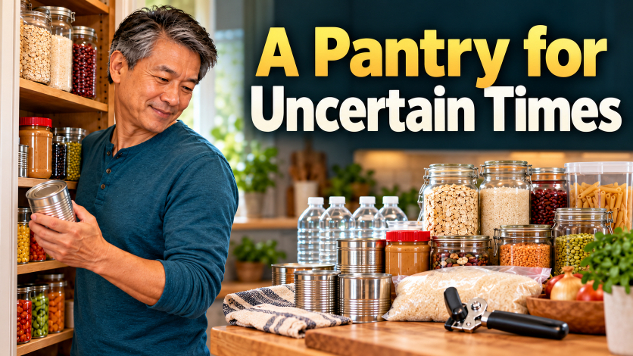
That is a useful place to start a family food reserve. You do not have to buy a mountain of unfamiliar supplies. Keep more of the food you use, eat the older stock first, and replace it as you go. Add drinking water and a few meals you can manage without electricity.
A storm may keep you home. A late paycheck may keep you out of the grocery store. The cupboard does not care which one happened. You still need dinner.
Start With Three Days
Health Canada recommends being able to take care of yourself and your family for at least 72 hours during an emergency. Start there. What would everyone in your home eat and drink for those three days if shopping were impossible?
Write the meals down. A shelf full of pasta looks reassuring until you remember that you need water and a working stove to cook it. Keep some food you can open and eat without either.
Include a manual can opener, and put it where everyone can find it. An electric opener is of little use when the power is off. Check that household members can open the packages you choose, too. A tight lid or awkward pull tab can be a problem for someone with limited hand strength.
Two people will need 24 litres of water to get through three days under Health Canada’s recommendation. Half is for drinking, the rest for cooking and cleaning. Add what your pets and any other household needs require. Before putting it all in a large container, try lifting it. Several smaller bottles might suit you better.
If local officials say the tap water is unsafe, follow their instructions. A stocked pantry does not make contaminated water safe to drink.

Buy What Gets Eaten
Before buying anything extra, look at what you already have. Check the back of the cupboard. There may be enough beans there to get you started, or several things nobody has wanted to eat since you bought them.
Start with what you already cook. If breakfast is usually oatmeal, buy another package of oats. Leave the case of canned peas on the shelf if you know nobody at home will eat them.
Think through a few meals before making your list. Beans or lentils might be part of dinner. Canned fish and crackers could make lunch without turning on the stove. Add vegetables, fruit, cereal, nut or seed butter, and shelf-stable drinks that suit your household. Read the labels as you shop. Check for allergens, salt, added sugar, and whether you will need water or heat to prepare what you are buying.
Tea, coffee, seasonings, and a favorite snack can have a place on the shelf. Being stuck at home is unpleasant enough without discovering that you forgot the one ordinary thing everyone looks forward to. Just leave room for the meals.
For infants, set aside suitable feeding supplies. Food allergies, celiac disease, and intolerances need the same attention they receive during normal shopping. Keep pet food and water as well. They will be expecting dinner on schedule.
A Few More Meals in the Cupboard
Once you have the recommended three days covered, how much more would you like to keep? A week might suit you. Several weeks might fit your budget and shelves, or it might be too much to buy right now. You can pick up an extra can or package when you shop and gradually add meals to the reserve. There is no requirement to reach those larger amounts.
You can build it during regular shopping. Buy an extra item you know you will use. Next time, fill another gap. There is no need to arrive home with a huge bill and nowhere to put the purchases.
For a longer interruption, rice, pasta, oats, and dried lentils give you ingredients to cook from. But keep the preparation requirements in mind. Dried beans need more than a place on the shelf. You will need water, cooking equipment, fuel, and time.
Keep the ready-to-eat supply even after the pantry grows. Having enough ingredients for weeks does not help much on the first evening of an outage if every meal needs cooking.
There is also a difference between staying home and leaving it. A large pantry cannot come with you easily. Keep a small portable emergency kit for an evacuation, even if the cupboards are well stocked.
Eat It and Replace It
Put new purchases behind older usable food. When you take something out, add it to the shopping list. That is rotation. It need not become a complicated bookkeeping exercise.
If you normally keep two cans of beans and want a reserve of six, build up to six. Use them as usual and replenish them. You are maintaining an amount, not saving those same six cans indefinitely.
Without a working fridge, what will you do with the rest of that large carton? It may cost less per serving, but only if you finish it before it spoils. Smaller packages could be the better buy. Check the label on shelf-stable milk and anything else you plan to keep. Being safe in the cupboard unopened does not mean it can stay there after you open it.
Check the reserve when your household changes. Children grow and eat more. Someone stops eating a particular food. A new dietary restriction makes an old standby unsuitable. Give away appropriate unopened food while it is still useful rather than leaving it forgotten.
Read the Dates Properly
In Canada, a best-before date concerns quality. It does not guarantee safety before that date, and food does not automatically become unsafe the day after it.
A product may lose flavor, freshness, texture, or some nutritional value as it ages. Poor storage or damage can make it unsafe regardless of the date. Best-before information generally applies to unopened products, so pay attention to instructions after opening.
Expiration dates are different. Certain products, including infant formula, have specific nutritional requirements and carry expiration dates that should be followed. Do not treat every date on every package as interchangeable. Rules also vary between countries.
USDA guidance gives general storage ranges for unopened canned foods kept in sound containers in a cool, clean, dry place. High-acid foods, such as many fruits and tomatoes, commonly have a recommended range of 12 to 18 months. Low-acid foods, including many vegetables and canned meats, commonly have a range of two to five years. Check the particular product rather than assuming the longest range applies.
Discard bulging or leaking cans and those with serious rust or deep dents, especially around seams. Do not taste questionable food to decide whether it is safe. Harmful bacteria may be present without an obvious smell or change in appearance.
What Happens to the Freezer?
A freezer can hold useful meals and ingredients. It also depends on electricity.
Health Canada says an unopened refrigerator keeps food cold for about four hours. With the door kept closed, a full freezer can keep food frozen for about 48 hours; a half-full one for about 24 hours. These are approximate times. A thermometer and official food-safety guidance help determine what remains safe.
Keep the doors closed as much as possible. Decide beforehand which food you would use first and what you could eat after refrigerated supplies were no longer safe. Do not assume cooking will rescue food that has been stored unsafely.
If you plan to cook outdoors during an outage, learn how to use the equipment before you need it. Never use a portable gas camping stove or charcoal grill indoors, including in a garage. Fuel-burning equipment can produce carbon monoxide, which you cannot see or smell and which can kill. Follow the manufacturer’s directions and official outdoor-use guidance.
Sometimes the sensible evening meal is the one that requires no flame.
Will Buying Ahead Save Money?
It can, but check the arithmetic.
An extra package bought before a price increase may cost less than buying it later. That helps only if you use it and store it properly. Food thrown away is money spent for nothing.
Compare unit prices. The bigger package is not always the cheaper one. Nor is a bargain useful if it sits untouched because preparing it takes more effort than your household will make.
Be careful about buying a reserve on expensive credit. Interest can swallow the saving you hoped to make. Start with what you can afford during ordinary shopping.
A working pantry can also help when an unexpected bill arrives. You may be able to postpone part of a grocery trip because meals are already available at home. That gives you some flexibility. It does not make low income disappear, and a family with little spare money may have difficulty building any reserve at all.
We should remember that before praising our own well-filled cupboards.
Leave Something for the Neighbors
Buying a little extra over time is different from emptying a shelf when a storm is already on the way. Other households need supplies too.
Talk to your neighbors while there is still time to do something. Can they open the cans they have stored? Does someone need help carrying water upstairs? A family with a baby may be running low on supplies. You will learn more by asking than by assuming everyone is ready.
If we can feed ourselves for a few days, emergency workers have one fewer household needing food right away. The family next door may not have had money to put anything aside. Someone else may need help preparing what they have. We should ask how they are getting along. Public agencies still have people to look after, however well stocked our own cupboard is.
For now, count the meals you could make from what is already in your kitchen. Count them twice: once with electricity and once without it. Then put the first missing item on your shopping list.
Keep using the food. Keep replacing it. You will know what is in the cupboard because you had some of it for dinner.
About the Author
Beth McDaniel is an ai staff writer for InnerSelf.com. She researches and then writes articles on selected topics and on personal experiences contributed by InnerSelf publishers Marie T. Russell and Robert Jennings.
Further Reading
-
The Prepper's Cookbook: 300 Recipes to Turn Your Emergency Food into Nutritious, Delicious, Life-Saving Meals
Tess Pennington offers recipes for making meals from stored ingredients, along with guidance on stocking food and cooking during emergencies. It can help you decide what belongs in the cupboard by considering what you will actually prepare and eat.
Amazon: https://www.amazon.com/exec/obidos/ASIN/1612431291/innerselfcom
-
A Year Without the Grocery Store: A Step by Step Guide to Acquiring, Organizing, and Cooking Food Storage (Are You Prepared, Mama?)
Karen Morris explains how to build and organize food supplies around familiar meals, household preferences, and dietary needs. She also addresses water storage and cooking without a conventional stove, considerations that become important when the electricity goes out.
Amazon: https://www.amazon.com/exec/obidos/ASIN/1984037048/innerselfcom
-
Prepper's Pantry: Build a Nutritious Stockpile to Survive Blizzards, Blackouts, Hurricanes, Pandemics, Economic Collapse, or Any Other Disasters
Daisy Luther covers choosing, purchasing, and managing food for a household reserve. Her approach includes building supplies gradually and keeping nutrition in mind, giving readers practical ways to start without buying everything at once.
Amazon: https://www.amazon.com/exec/obidos/ASIN/1631583913/innerselfcom
Article Recap
Building a family food reserve for emergencies and rising prices works best when you start with a 72 hour supply, store enough water, and choose food your household already eats. A practical pantry for power outages and longer financial uncertainty depends on rotation, ready to eat meals, and a realistic plan for dietary needs, freezer limits, and safe emergency cooking.
#EmergencyPreparedness #FoodReserve #WorkingPantry #PantryRotation #PowerOutagePrep #RisingFoodPrices #HouseholdResilience #WaterStorage #FamilyPreparedness #BudgetFriendlyLiving