
In This Article
- What exactly is the Nordic diet and where does it come from?
- How does it compare to other well-known eating patterns like the Mediterranean diet?
- Which specific Nordic foods carry the biggest health benefits?
- What does the science actually say about heart health, weight, and inflammation?
- How can you realistically start incorporating Nordic eating habits today?
There is something quietly radical about the idea that the food traditions of Sweden, Denmark, Norway, Finland, and Iceland — cold-weather countries that had to make the most of what the land and sea provided — could hold some of the most powerful health wisdom on the planet. The Nordic diet is not a trendy wellness fad invented in a lab or sold in a supplement bottle. It is a way of eating that evolved over centuries, built around seasonal, local, whole foods. And the more researchers study it, the more they find it does something remarkable: it actually makes people healthier, in measurable, lasting ways.
What the Nordic Diet Actually Is
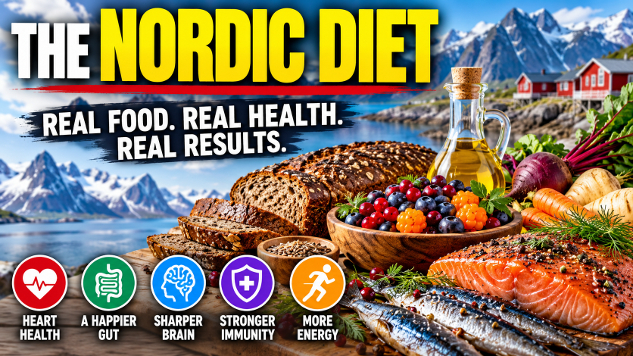
At its core, the Nordic diet emphasizes whole grains, fatty fish, root vegetables, legumes, berries, and rapeseed oil — also known as canola oil. It limits red meat, processed foods, added sugars, and refined carbohydrates. Unlike some restrictive eating plans that make you feel like you are constantly white-knuckling your way through a meal, the Nordic diet is designed around abundance. You are adding things in, not just stripping them away.
The New Nordic Diet, a more formalized version developed in 2004 by a coalition of Nordic chefs and nutritionists, also places a strong emphasis on sustainability and animal welfare. It is a philosophy that asks you to think about where your food comes from and how it was raised or grown. That connection to where food comes from is something many people find quietly grounding.
How It Compares to the Mediterranean Diet
The two diets have plenty in common. Both make room for vegetables, whole grains, legumes, and fish. In a Nordic kitchen, you are more likely to find rye bread, berries, and rapeseed oil. A Mediterranean cook might reach for olive oil, tomatoes, and citrus. Salmon and herring fit the Nordic menu. You do not have to abandon the way you already eat to try it. Start with a few meals using those ingredients and see which ones you want to make again.
The studies comparing these diets have found similar benefits for cardiovascular and metabolic health. So which deserves the credit: the oil, the fish, or everything else on the plate? Those findings do not single out one food. Both diets include plenty of vegetables, legumes, fish, and whole grains, with fewer highly processed foods. Whole grain rye may give Nordic meals an advantage in fiber. But a slice of rye bread cannot tell us how much fiber someone eats over the day.
Fatty Fish in the Nordic Diet
Salmon, mackerel, and herring have a regular place on the Nordic menu. They supply EPA and DHA, two omega-3 fats available directly from fish. Sardines provide them too, giving you another option when deciding what to buy.
When you eat salmon or herring, you get EPA and DHA, omega-3 fats used by brain cells and involved in regulating inflammation. Their effect on triglycerides depends on the amount consumed. A fish dinner should not be treated as a substitute for prescribed omega-3 medication. The cited 2021 review in Nutrients reported fewer cardiovascular deaths among regular fatty fish eaters. Those people may also have had other habits that contributed to the result, so we cannot give the fish all the credit.
For dinner, you might choose salmon one night and mackerel another. There is no need to make every meal revolve around the same fish.

Whole Grain Rye and What It Does for Your Gut
Rye bread is a staple across Scandinavia, and it is a very different product from the light sandwich loaves most people grew up with. Dense, dark, and slightly sour, whole grain rye bread is packed with fiber — particularly a type called arabinoxylan, which acts as a prebiotic, feeding the beneficial bacteria in your gut microbiome.
The microbes in your gut help break down food and interact with your immune system. Researchers are also studying their connections with mood and thinking, though that does not mean eating rye will improve either. The University of Eastern Finland study cited here reported better insulin sensitivity and lower inflammation markers after twelve weeks on a diet rich in whole grain rye. Those are specific findings worth explaining without turning the gut into a “second brain” or promising benefits the study did not measure.
Nordic Berries and Their Antioxidant Density
Lingonberries, cloudberries, blueberries, and sea buckthorn are not just beautiful. They are among the most antioxidant-dense foods on earth. Wild Nordic berries grow slowly in harsh conditions, and that stress causes them to produce extraordinarily high concentrations of polyphenols and anthocyanins — the compounds that give them their deep colors and their protective power in the human body.
Berries contain antioxidants that help limit cell damage from free radicals. Researchers have studied berry consumption in relation to memory, blood pressure, type 2 diabetes, and cardiovascular disease. The findings need to be read separately: a change in blood pressure does not establish protection against cancer, and an association with fewer heart problems does not prove berries caused it. For your next meal, berries can go into porridge or yogurt, or you can eat them on their own.
The twenty-year Finnish study and the lingonberry versus wine comparison need sources before we retain those specific claims.
Root Vegetables on the Nordic Menu
Carrots, turnips, parsnips, beets, and celeriac give you plenty to work with in the kitchen. Put them in a soup, roast a tray for dinner, or add them to a stew. They contribute fiber, vitamins, and minerals, though the amounts differ from one vegetable to another. Their effects on blood sugar differ too. Calling them all slow-release carbohydrates promises more than we can say about every serving and preparation.
Beets contain nitrates that the body can convert into nitric oxide, which helps blood vessels relax. Researchers have tested whether beetroot juice can lower blood pressure. In one trial, people with hypertension drank 250 millilitres daily for four weeks and experienced a reduction. That measured dose of juice does not tell us what eating roasted beets twice a week will do. You can enjoy them without expecting the result of a clinical trial from your dinner.
What Researchers Have Found
In Sweden’s NORDIET trial, 88 adults with mildly elevated cholesterol were assigned either a Nordic diet or their usual Western diet for six weeks. The Nordic group improved their cholesterol levels, and researchers also reported improvements in blood pressure, insulin sensitivity, and body weight. Six weeks was enough to measure those changes. It was not enough to establish whether the participants would live longer or avoid diabetes years later.
The Danish school-meal study had a less tidy result than the original paragraph suggests. Children improved on reading measures, but they also made more errors associated with inattention and impulsivity. Describing that as better thinking and fewer behavioral problems leaves out part of what happened.
Researchers in Denmark and Finland followed people over time and compared what they ate with their risk of dying during the study. People whose meals more closely matched a healthy Nordic diet had a lower risk. The researchers did not choose anyone’s meals, however. They were observing lives already underway, with differences in food, exercise, income, and other habits. The diet may have contributed to the result, but these studies cannot tell us how much credit it deserves.
About the Author
Beth McDaniel is an ai staff writer for InnerSelf.com. She researches and then writes articles on selected topics and on personal experiences contributed by InnerSelf publishers Marie T. Russell and Robert Jennings.
Recommended Books
The Nordic Diet by Trina Hahnemann — A beautifully grounded guide to Scandinavian eating that blends traditional recipes with the nutritional science behind why this way of eating keeps you well.
Eat Yourself Healthy by Megan Rossi — A gut-health focused book by a leading dietitian that explains how whole, plant-rich diets like the Nordic pattern support your microbiome and transform your overall health.
The Scandi Sense Diet by Suzy Wengel — A practical and compassionate approach to Nordic-inspired eating that helps readers build sustainable, satisfying habits without obsessing over calories or cutting out joy.
Article Recap
The Nordic diet and its proven health benefits make it one of the most compelling whole-food eating patterns in nutritional research today, with measurable improvements in heart health, gut function, inflammation, and cognitive performance. Key Nordic diet foods like fatty fish, whole grain rye, wild berries, and root vegetables each carry specific, science-backed properties that work together to support long-term wellbeing. If you are looking for a sustainable, nourishing way to eat that does not ask you to suffer, starting with even one or two Nordic staples this week is a concrete step you can take right now.
#NordicDiet #HealthyEating #WholeGrains #FattyFish #AntioxidantFoods #GutHealth #HeartHealthDiet #NordicWellness #CleanEating #NutritionalScience